
If you are planning a new backyard patio in Fairfax County, the first big decision is usually pavers vs concrete patio. Both can look great on day one, but they behave very differently over twenty years of Northern Virginia weather. Here is an honest comparison to help you decide.
How pavers and concrete are built
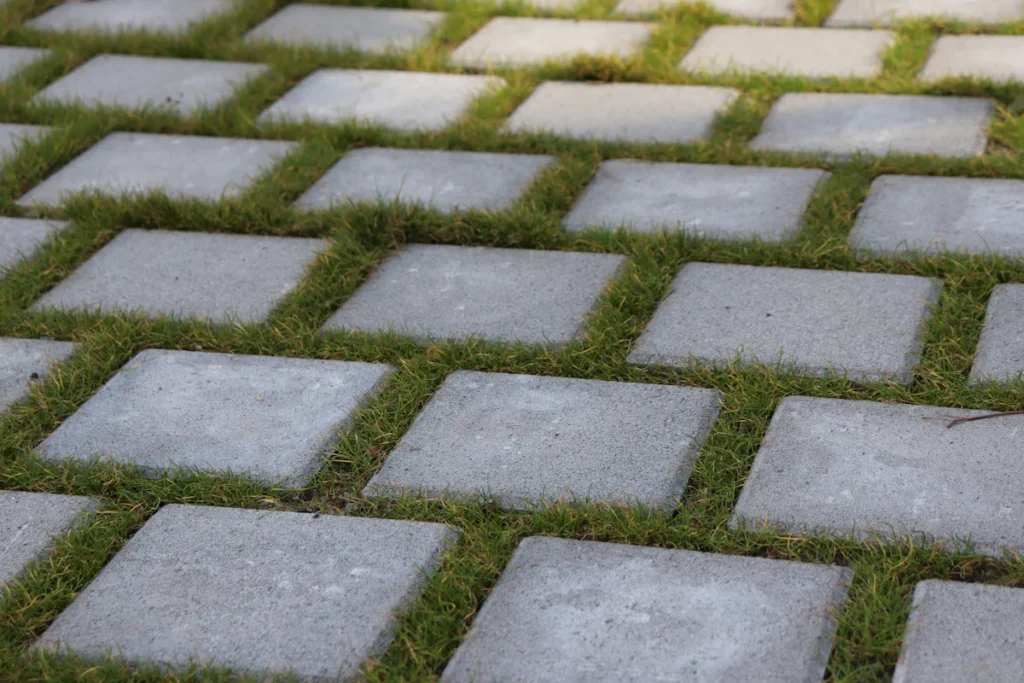
A poured concrete patio is one continuous slab, typically about four inches thick, poured over a gravel base and cut with control joints. A paver patio is made of many individual units, either concrete pavers, brick or natural stone, set on a compacted crushed-stone base and a thin bedding layer, then locked together with joint sand and edge restraints.
That difference matters. Concrete is rigid, so when the ground moves it tends to crack. Pavers are flexible, so the patio can move slightly as a system without breaking.
Durability in freeze-thaw and clay soil
Fairfax County has heavy clay soils that swell when wet and shrink when dry, plus regular freeze-thaw cycles in winter. Those forces are the main reason concrete patios crack and heave in Northern Virginia. Quality concrete pavers are also very dense and strong, often rated well above typical poured concrete in compressive strength, and their joints relieve stress.
Neither option will last if the base is poor, which is why proper excavation and compaction are so important. Read more in our guide to paver patio installation.
Cost comparison
Plain poured concrete usually costs less up front than pavers. Stamped or colored concrete narrows the gap. Pavers typically cost more initially, but over the long run they can be cheaper because repairs are simple and inexpensive. When a concrete slab cracks badly, the usual fix is removal and replacement. For current local numbers see our paver patio cost guide.
Repairs and maintenance
- Pavers: lift and reset sunken areas, replace a stained or broken paver, top up joint sand, optionally seal every few years.
- Concrete: cracks can be patched but patches rarely match. Stamped concrete needs resealing, and large cracks or heaving often mean replacement.
Already have a worn paver patio? Patio repair and restoration can make it look new again.
Design flexibility
Pavers come in hundreds of shapes, colors and textures, from classic brick to modern large-format slabs. You can add borders, curves, circles and inlays, and easily match a fire pit or seat wall. Concrete can be stamped and stained, but options are more limited and color can fade.
Resale value and curb appeal
In higher-value neighborhoods like McLean, Vienna and Great Falls, buyers often see a paver or natural stone patio as a premium feature. A cracked slab, on the other hand, is often seen as something to replace.
Pavers vs concrete patio: side-by-side summary
- Up-front cost: concrete usually wins on a basic slab; pavers cost more initially.
- Lifespan in freeze-thaw: pavers flex and drain; concrete is more likely to crack.
- Repairs: pavers can be lifted and reset; concrete cracks are hard to hide.
- Design options: pavers offer far more colors, shapes and patterns.
- Maintenance: pavers need occasional joint sand; stamped concrete needs regular resealing.
- Resale appeal: pavers and natural stone are often seen as a premium upgrade.
- Best for: pavers for long-term value and style; concrete for tight budgets and utility areas.
When homeowners in McLean, Vienna, Burke and across Fairfax County weigh pavers vs concrete patio options, the deciding factor is usually how long they plan to stay in the home. If you expect to enjoy the patio for ten years or more, the durability and easy repairs of pavers tend to pay off. If you need a simple, low-cost surface for a few years, concrete can be a reasonable choice.
Common mistakes to avoid
Whichever side of the pavers vs concrete patio debate you land on, avoid these common mistakes: skipping a proper compacted base, sloping the surface toward the house, ignoring downspouts that dump water onto the patio, and hiring an unlicensed crew to save money. Each of these can shorten the life of any patio, no matter how good the material.
The verdict: pavers vs concrete patio
For most Fairfax County homes, pavers are the better long-term choice thanks to their flexibility in freeze-thaw cycles, easy repairs and design options. Concrete can make sense for a tight budget or a purely utilitarian area. Whichever you choose, hire a licensed contractor who builds a proper base. You can verify any Virginia contractor on the DPOR license lookup.
Planning a patio in Fairfax County? Get a free quote from a licensed local pro, or call +1 (571) 830-9349. Fairfax Paver Patios is a free referral service; all work is performed by independent, licensed contractors.