Free quotes from licensed local pros · Fairfax County, Virginia

Fairfax County, Virginia
Retaining wall installation in Fairfax, VA
Turn a sloped yard into level, usable space with professional retaining wall installation. Licensed Fairfax County contractors build segmental block and natural stone walls designed to last.
- Segmental block, natural stone and seat walls
- Proper footing, drainage and backfill
- Permit guidance for taller walls
Level your yard
Why retaining wall installation matters in Fairfax County
Much of Fairfax County is rolling terrain. Homes in Great Falls, Clifton, Fairfax Station and Oakton often sit on lots that slope toward a stream or wooded lot line, which leaves little flat space for a patio, play area or garden.
A well-designed retaining wall holds back soil so you can create level terraces. It also controls erosion, redirects runoff and can frame a paver patio with a built-in seat wall. Because walls hold back thousands of pounds of soil and water, retaining wall installation is a job for an experienced, licensed contractor, not a weekend project.
- Creates flat, usable space on sloped lots
- Stops erosion and soil washout
- Manages stormwater and drainage
- Adds structure and beauty to the landscape
Wall types
Retaining wall options
Segmental block walls
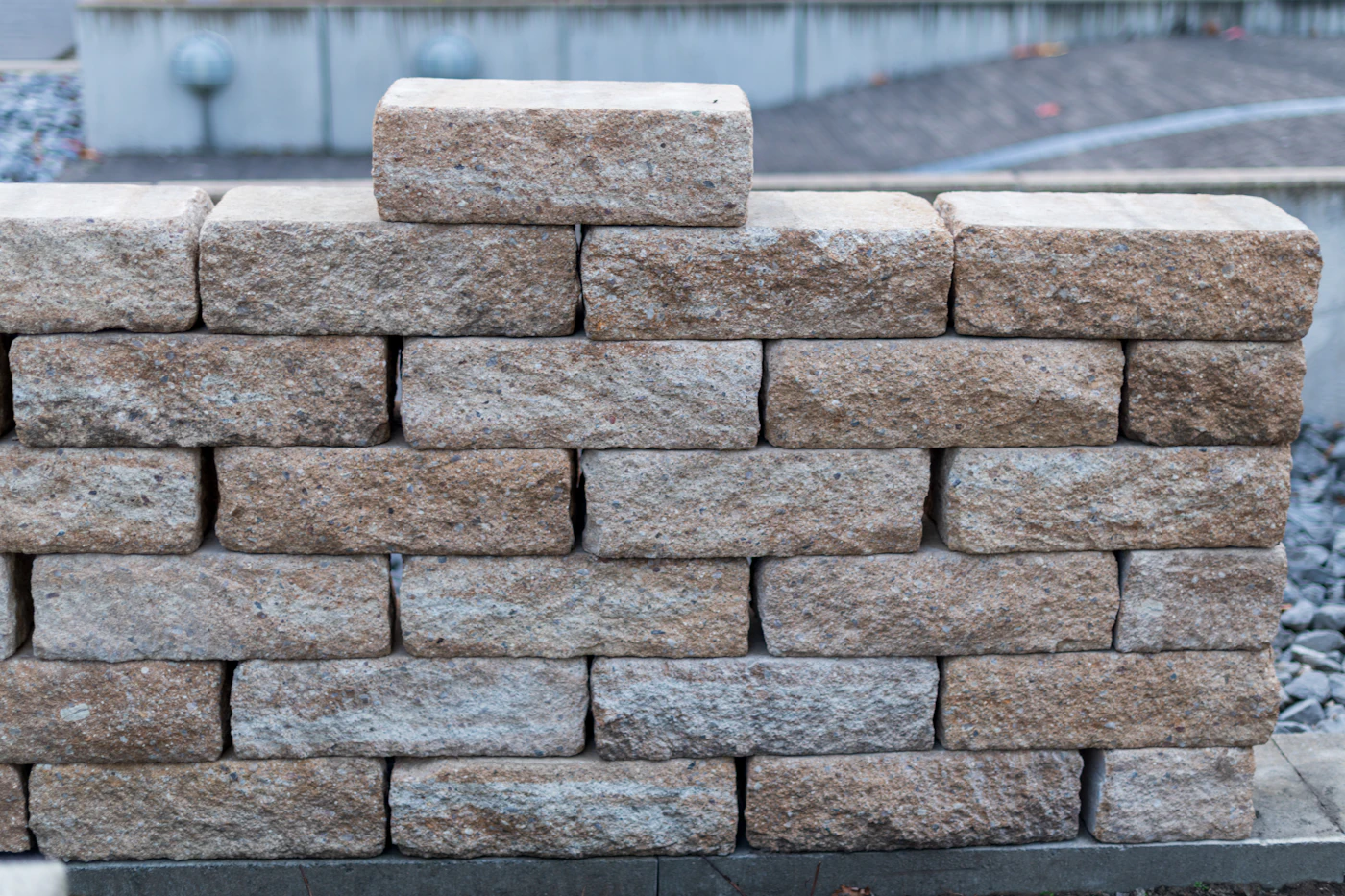
Interlocking concrete blocks that stack without mortar. Strong, affordable and available in textures that mimic natural stone.
Natural stone walls
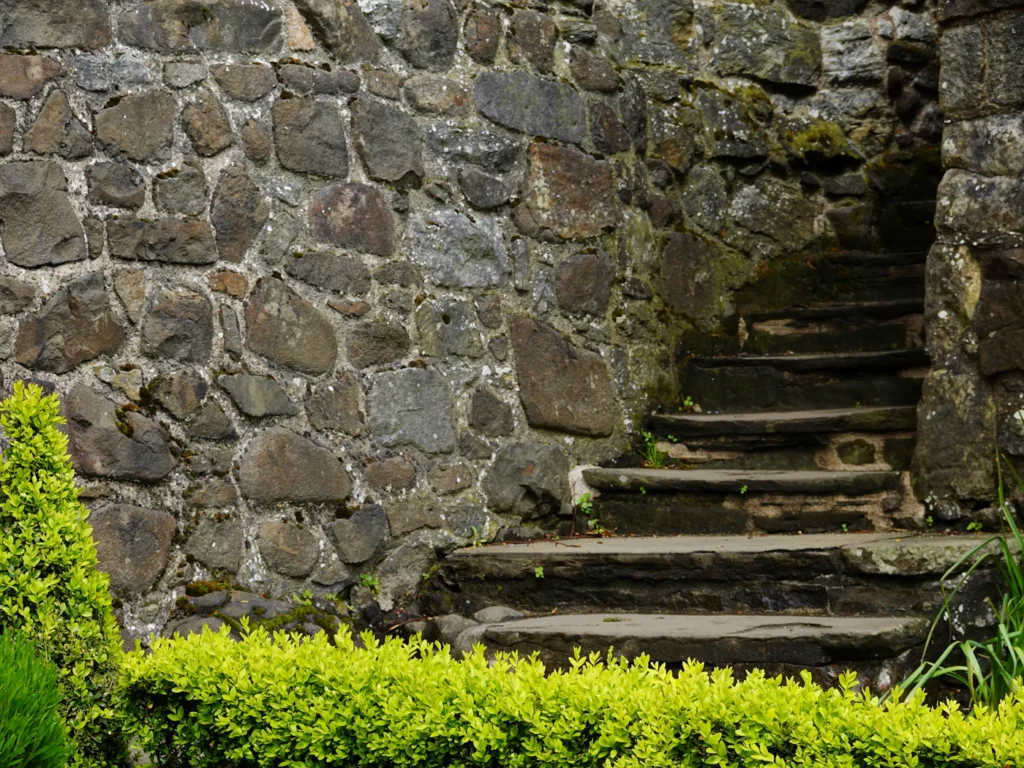
Fieldstone, ledgestone or boulder walls for a premium, organic look that suits wooded Fairfax County lots.
Seat walls
Low freestanding walls at seating height that border a patio or fire pit and add built-in seating.
Terraced walls
Two or more shorter walls stepped up a slope. Often a better choice than one tall wall, with room for plantings.
Drainage-focused walls
Walls designed with perforated drain pipe and clean stone backfill to handle heavy runoff areas.
Walls with steps
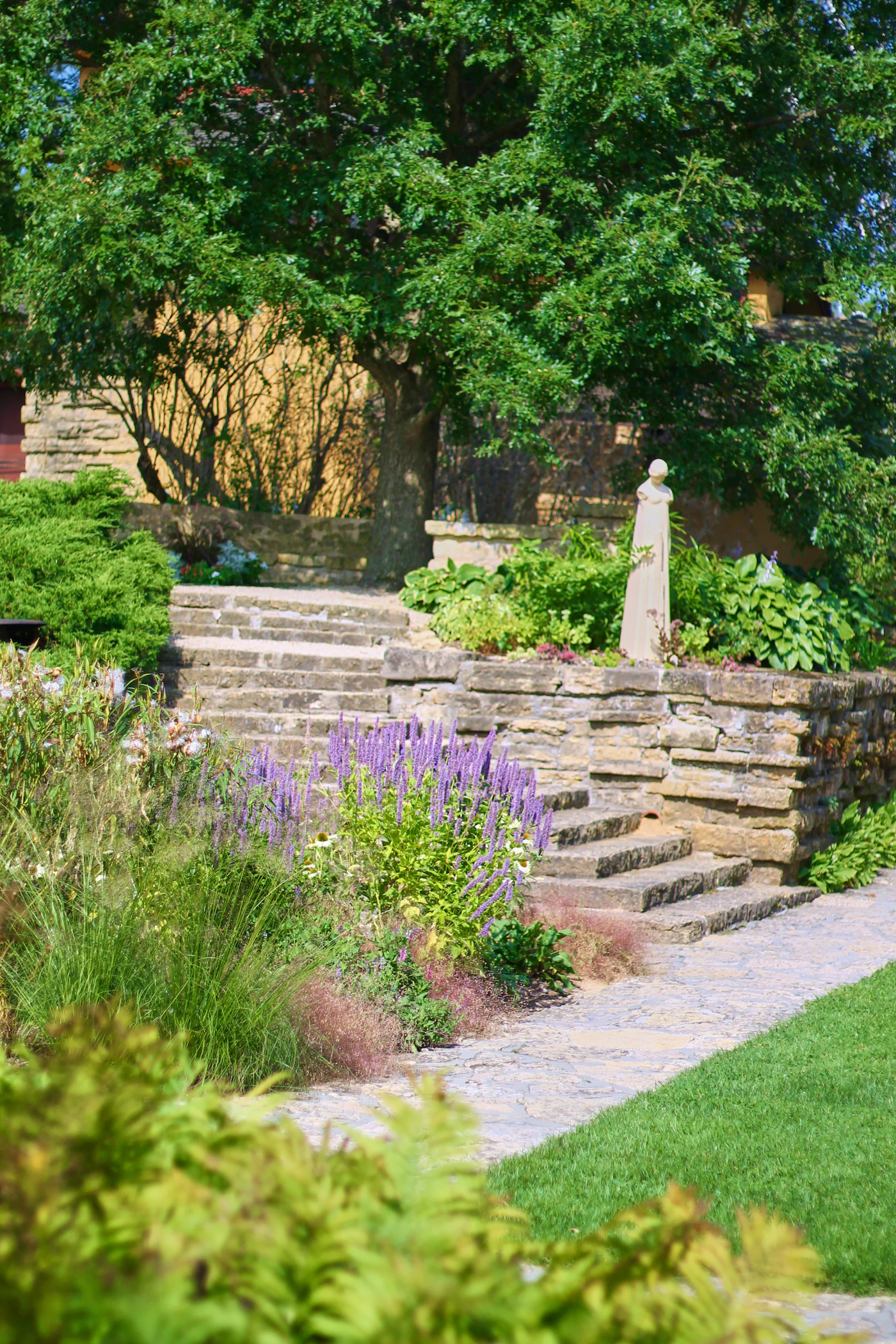
Integrated steps that connect upper and lower levels of the yard. See our walkways and steps service.
Permits
Retaining wall permits in Fairfax County
Height is the main factor. According to Fairfax County Land Development Services, a residential retaining wall permit applies to walls retaining more than three feet but less than four feet of earth that are non-tiered and have level backfill with no surcharge. Walls retaining more than four feet of earth require a commercial retaining wall permit, which typically involves engineered plans.
Walls with sloped backfill, tiered walls, or walls supporting a driveway, patio or structure above (called a surcharge) need extra care and may need engineering even at lower heights. Rules can change, so confirm with the county or let your contractor handle it. Retaining wall installation near property lines, easements or streams may also need additional review, and many HOAs require approval. Read our HOA approval guide for tips.
The process
How retaining wall installation works
Survey and design
Measure the slope, mark utilities, confirm permits and choose the wall system, height and layout.
Excavate and set the base
Dig a trench, compact a crushed-stone leveling pad and bury the first course for stability.
Build with drainage
Stack courses with setback, install perforated drain pipe and backfill with clean gravel behind the wall.
Cap and finish
Glue cap units, backfill with topsoil, grade for drainage and restore lawn or plantings.
Budget
Retaining wall installation cost
Retaining walls are usually priced per square foot of wall face. In Fairfax County, segmental block walls often cost less per square foot than natural stone, and short garden or seat walls cost less than structural walls that need engineering and permits.
The biggest cost drivers are wall height, length, site access for equipment, soil conditions, drainage needs and whether old walls must be removed. For a combined project with a patio, see the paver patio cost guide, then request a free quote for exact pricing.
- Wall height and total face area
- Block versus natural stone
- Engineering and permits for taller walls
- Access, excavation and soil removal
Where we work
Retaining wall installation near you
How tall can a retaining wall be without a permit in Fairfax County?
Fairfax County residential retaining wall permits apply to walls retaining more than three feet of earth, and walls over four feet require a commercial permit. Shorter walls may not need a building permit, but always confirm with the county or your contractor, especially with surcharge loads or sloped backfill.
How long does a retaining wall last?
A properly built segmental or stone retaining wall with good drainage can last 50 years or more. Poor drainage is the main reason walls bulge or fail.
Why is drainage behind the wall so important?
Water trapped behind a wall adds enormous pressure. Drain pipe and clean gravel backfill relieve that pressure and prevent leaning, bulging and collapse.
Can a retaining wall be built in winter?
Yes, as long as the ground is not frozen or saturated. Winter is often a good time to schedule retaining wall installation before spring patio season.
Can you combine a wall with a patio?
Absolutely. Many projects pair a retaining wall with a paver patio or fire pit to create a level outdoor room.
Free, no-obligation quotes
Level your yard with a new retaining wall
Get a free quote for retaining wall installation from a licensed contractor serving your Fairfax County neighborhood.
Fairfax Paver Patios is a free referral service. Your project is quoted and built by an independent, licensed Virginia contractor.